
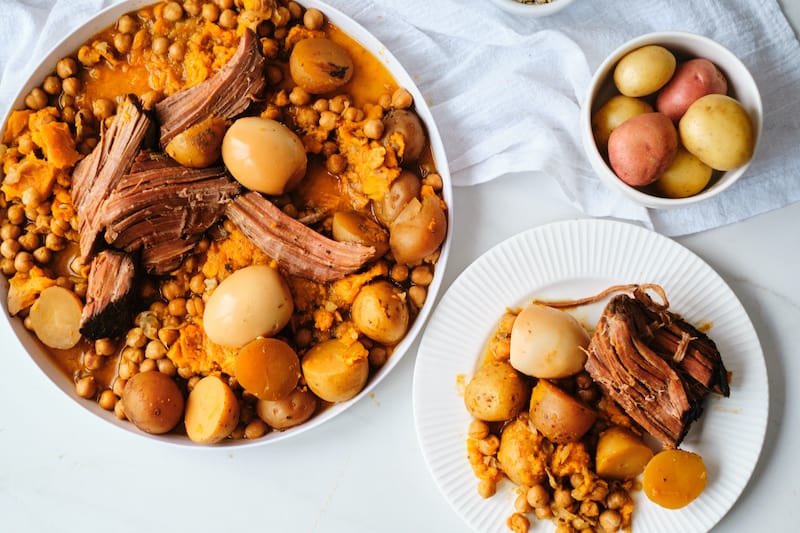
Découvrez la recette traditionnelle de Dafina, plat emblématique de la cuisine juive marocaine.
Discover the Richness of Dafina: A Culinary Jewel of Moroccan Jewish Tradition
Explore the delicious world of Dafina, a cherished Moroccan Jewish dish that blends tradition with remarkable flavors.
Dafina, or skinha, stands out as a hallmark in Moroccan Jewish culinary heritage. Often regarded as the Jewish version of Moroccan tajine, this dish is not just a meal but a rich tapestry woven from history and tradition. With its slow-cooking technique and various adaptations, Dafina takes center stage during significant occasions, notably Shabbat and holidays like Hanukkah.
The versatility of Dafina is evident, with names like Moroccan cholent and hamin being among the many that refer to this beloved recipe. The excitement around this dish draws its roots from both Jewish and Muslim culinary practices in Morocco, showcasing a beautiful blend of cultures.
Cultural Crossroads: The Significance of Dafina
The importance of Dafina transcends mere gastronomy. It reflects a shared gastronomic culture where Jewish and Muslim communities interacted closely, particularly in melting-pot cities like Marrakech. Although my Muslim mother-in-law was not familiar with the ins and outs of the recipe, the communal experience of enjoying this dish echoed the familiarity of her neighbors.
As a Jewish dish traditionally cooked in community ovens known as ferhans, Dafina has a rich backstory. Observant Jews avoid any physical activity on Shabbat, leaving preparation to a communal effort. This aspect of cooperation symbolizes a deeper connection among families and communities.
Cooking Techniques That Unite Cultures
Dafina’s preparation is an art form rooted in cultural cooperation. Though recipes may vary, the core techniques remain consistent, showcasing how Moroccan Jews share many cooking methods with their Muslim counterparts. The heart of the dish involves using a slow-cooking process which has evolved over the years.
Traditionally, this dish is made in a pot similar to a tangia, ensuring that the flavors meld beautifully over time. Today, many prefer modern adaptations, such as slow cookers, allowing for easier preparation while maintaining its essence. This shift still honors tradition, particularly among Jewish families seeking to keep their customs alive.
Ingredients and Variations: Crafting Your Own Dafina
Creating your version of Dafina can be as personalized as your taste. With base ingredients like beef, potatoes, chickpeas, and spices, the flexibility within each family’s recipe abounds. When sharing this dish with family, I included explanations rooted in our storytelling traditions, reminiscent of the warmth found in Jewish households, particularly in the mellah of Marrakech.
While traditional recipes often call for beef feet, they can easily be omitted for those who prefer not to include them. Additionally, vegetarian adaptations offer another avenue. By utilizing a medley of vegetables and beans, this dish can cater to various dietary preferences, ensuring that everyone can partake in its delightful flavors.
Pairing Suggestions: Elevating Your Dining Experience
To enhance the dining experience of Dafina, consider pairing it with fresh Moroccan salads, crusty bread like challah, or pickled vegetables to provide balance and contrast to the dish’s rich flavors. Steamed couscous is another excellent side that soaks up the savory juices.
On a celebratory note, a glass of Moroccan mint tea rounds off the meal splendidly, balancing the palate and providing a comforting finish to the dining experience. Each element contributes to a holistic approach to enjoying Dafina, encapsulating the spirit of Moroccan hospitality.
Step-by-Step Guide: Making Your Dafina
Preparation for this beloved dish is an endeavor worth every moment. With a total time of about six hours, most of which is hands-off cooking, the journey is rewarding.
Start with 2 lbs of beef, adding various vegetables such as potatoes and sweet potatoes per person, plus seasonings. Rinsed chickpeas add a nutritious element, while garlic cloves infuse flavor. Once everything is combined in a slow cooker, the last step involves nesting uncooked eggs into the mix—a method steeped in tradition.
Set your slow cooker on low for at least six hours, allowing the ingredients to meld thoroughly. When complete, serve it alongside the various suggested pairings for a truly authentic experience.
A Tribute to Culinary Tradition and Patience
In an age dominated by fast-paced meals, Dafina stands as a tribute to the beauty of patience and familial tradition in cooking. The essence of this slow-cooked dish serves as a reminder of its cultural significance, bringing families together around the table.
Dafina is not merely food; it embodies a rich celebration of time, community, and shared experiences that have been honed for generations. If you wish to explore easy Arabic recipes or delve into the Middle Eastern culinary tradition, Dafina offers an exquisite introduction to a world where flavor and history intersect.
The journey of making and enjoying Dafina nurtures connections and celebrates the rich tapestry of Moroccan Jewish culture. Embrace this dish, and let it deepen your appreciation of culinary traditions that continue to thrive in Moroccan homes today.