
La culture du thé à la menthe au Maroc : un symbole d’hospitalité et de tradition
Exploring the Heart of Moroccan Culture: The Significance of Mint Tea
Discover the intricate traditions and social importance of Moroccan mint tea, a beverage that symbolizes hospitality and cultural identity.
Moroccan mint tea culture is a deeply ingrained aspect of daily life in Morocco, representing far more than just a drink. Known locally as “Atay b’nna’na,” mint tea is a vibrant symbol of hospitality, friendship, and tradition. This article dives into the captivating world of Moroccan mint tea, examining its preparation, significance, and the essential role it plays in social contexts.
The Art of Mint Tea Preparation
Preparing Moroccan mint tea involves an intricate blend of Chinese green tea, fresh mint leaves, and a generous amount of sugar. The art of crafting this tea follows a specific set of steps that elevate it from a simple beverage to a cherished ritual.
The process begins with boiling water, poured over the tea leaves in a teapot to rinse them. This initial infusion is discarded, ensuring that the tea leaves open up fully and any impurities are removed.
After rinsing, fresh boiling water is added again, marking the commencement of the actual tea-making process. Green tea, preferred for its flavor, plays a pivotal role, with high-quality leaves enhancing the taste of the brew significantly.
Fresh mint leaves are next introduced to the teapot, accompanied by a generous helping of sugar. The level of sweetness in Moroccan mint tea is notably high compared to Western teas. Once added, the tea, mint, and sugar are allowed to steep for several minutes, allowing their flavors to meld harmoniously.
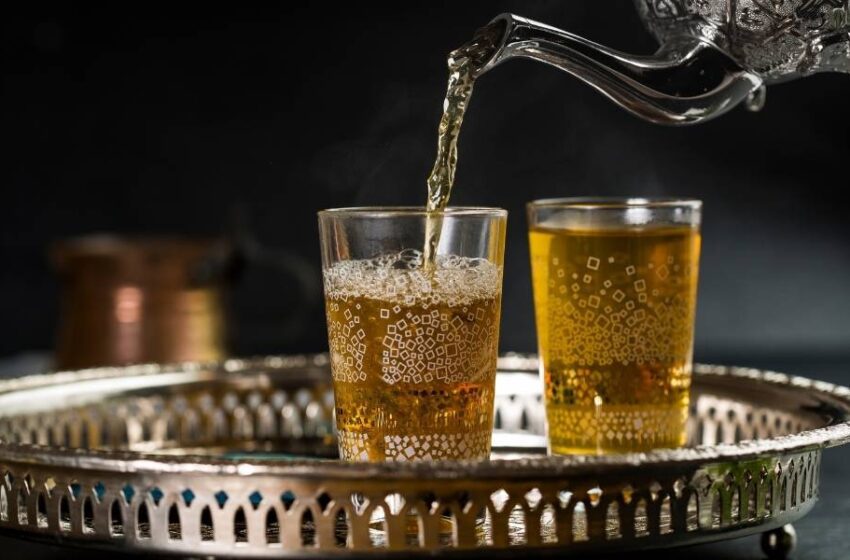
Pouring is an essential part of the Moroccan tea ritual. Traditional practice dictates that tea should be served from a height of about a foot, a method believed to enhance the flavor and produce a frothy head. The tea is then served in small, decorative glasses, with the server holding each glass by the bottom, allowing guests to take the first sip while saving the stronger, sweeter last sip for themselves.
The Role of Moroccan Tea Pots
At the core of the mint tea preparation lies the iconic Moroccan teapot, also known for its long spout. These teapots, typically made from brass, copper, or silver, are not only functional but also artistic creations.
Moroccan tea pots boast exquisite designs, coming in various shapes and sizes but typically featuring a bulbous bottom, a long curved spout, and a hinged lid. Often adorned with intricate engravings and patterns, they serve as both vessels and works of art, enhancing the entire tea experience.
Delightful Additions: Tea and Cookies
In Moroccan culture, tea is frequently served alongside a delightful variety of cookies and pastries, complementing the sweetness of the mint tea. This combination elevates the tea-drinking experience and reinforces the tradition.
Some familiar Moroccan cookies include “Ghriba,” known for their crumbly and nutty texture, “Kaab el Ghazal,” soft crescent-shaped almond-filled treats, and “Fekkas,” crispy biscuits infused with spices. The pairing of these cookies with mint tea manifestly illustrates a perfect blend of flavors and textures that is cherished during tea time in Morocco.
The Symbolism of Moroccan Mint Tea
Mint tea holds a far-reaching significance in Moroccan society that goes beyond mere refreshment. It occupies a central role in the nation’s hospitality and cultural landscape.
Offering mint tea is a proud symbol of welcoming guests. This gesture is customary whether in private homes, shops, or cafés. The act of serving tea signifies warmth and hospitality, reinforcing connections between hosts and guests.
Furthermore, Moroccan mint tea acts as a social glue. It forms the basis of gatherings, whether informal meetups among friends, family celebrations, or professional business meetings. The simple act of drinking tea fosters conversations and connections, enriching relationships across various social settings.
Beyond its immediate social implications, mint tea also embodies national identity. It showcases the fusion of multiple cultural influences, primarily reflecting the Arab, Berber, and French legacies that have shaped Moroccan society.
Souk Surprises Await
For visitors venturing into the vibrant souks of Morocco, delightful surprises await. Merchants often extend a warm invitation with a glass of tea as patrons explore their wares. This spontaneous act mirrors the underlying spirit of hospitality intrinsic to Moroccan culture.
Culminating Tradition of Mint Tea
The ritual surrounding Moroccan mint tea transcends the simple act of drinking. It embodies a lifestyle that signifies warmth, hospitality, and a connection to cultural heritage. The meticulous art of preparing and serving mint tea is a cherished practice steeped in meaning and history.
This timeless beverage serves as a medium through which people unite, whether for joyous celebrations, soothing conversations, or moments of reflection.
Embracing the experience of savoring Moroccan mint tea offers engrossing insight into the heart and soul of Moroccan culture.